Species & Seasonal Patterns in Central Hokkaido
← Dispatches from Central Hokkaido
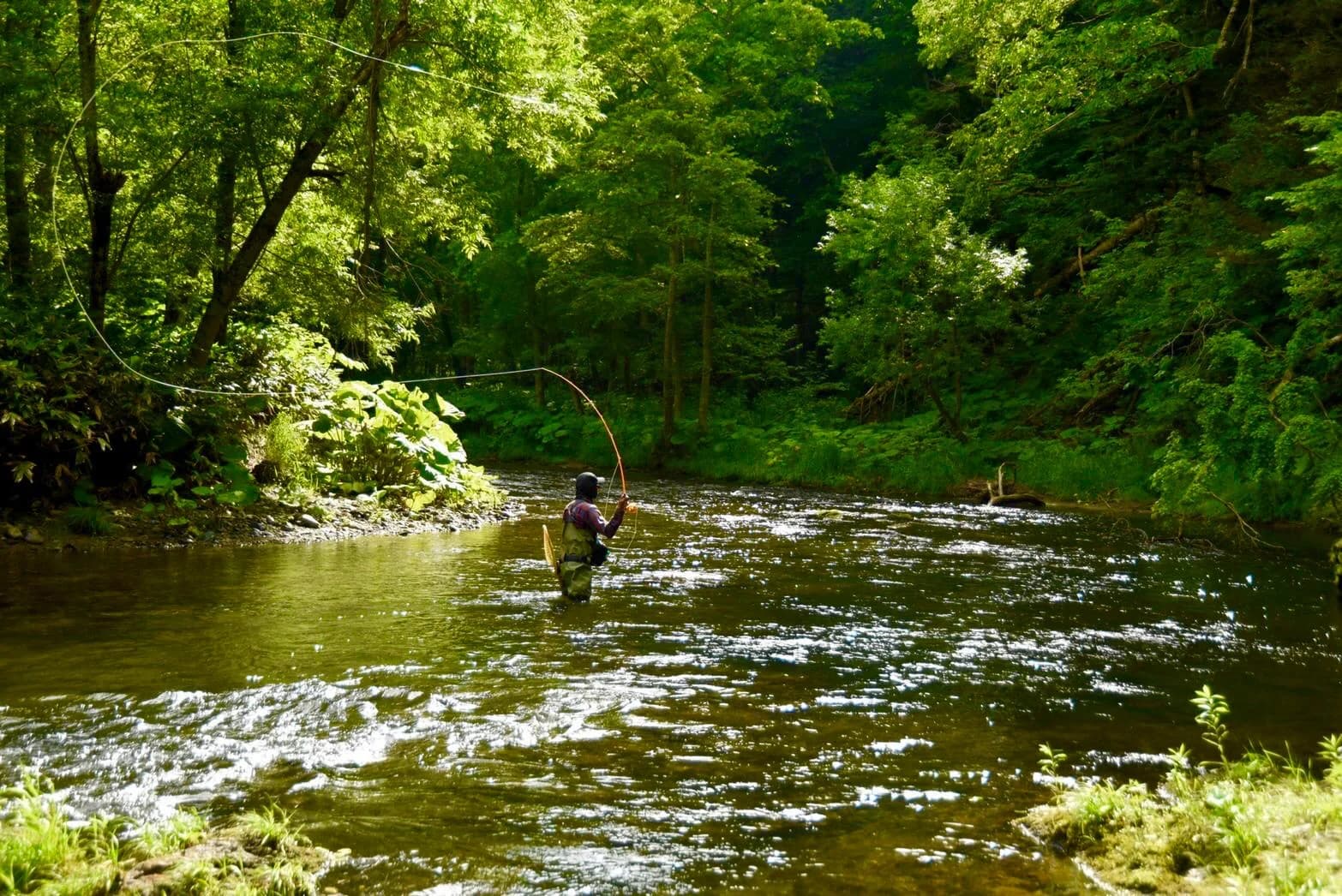
Central and eastern Hokkaido's rivers boast an impressive lineup of salmonids. Anglers can target several species depending on the river and season. Here's what you'll find and when they're most active.
Species You'll Encounter
White-spotted Char (Iwana)
A native char found in cold, fast-flowing streams. They have pale spots and a yellow sheen, and larger ones (especially the "Amemasu" form that migrates within rivers or lakes) can reach 50+ cm and fight ferociously. Char are often caught in deeper pools or runs and readily rise to dries in summer. They spawn in autumn. By early fall they exhibit vivid colors.
Yamame / Masu Salmon
Yamame are the beautiful landlocked form of cherry salmon, sporting par marks (dark oval spots) on their sides. They inhabit many streams here. Typically 6–10 inches, a big yamame might be 12–14 inches. They are aggressive surface feeders in summer. The sea-run form (sakuramasu) enters larger rivers (Tokachi, Mukawa, etc.) from spring to early summer to spawn. Those anadromous fish are off-limits to intentional fishing (must be released if caught).
Rainbow Trout
Introduced a century ago, rainbows have naturalized in Hokkaido and are now a staple sportfish in these rivers. Wild rainbows up to about 20 inches are possible in richer systems (Tokachi, Sorachi), though 8–16 inches is more common. They thrive in lower elevations and below dams, and tend to hit nymphs, streamers, and even dries aggressively. Rainbows spawn in spring (April–May), so by late spring (May–June) they are hungry post-spawn and very active.
Dolly Varden Char (Oshorokoma)
Locally called Oshorokoma, these smaller native char favor cold headwaters. They are known for their striking orange spots and fins. In large rivers or lake-run forms they can reach a kilo or more, but in small streams they're 5–8 inches typically. Dolly Varden spawn in fall. They often share habitat with white-spotted char but tend to stick to higher gradient creeks. If you catch a tiny char with vivid markings in a tributary, it's likely an oshorokoma.
Brown Trout
Browns are not widespread in this particular region, but a few may exist in the Tokachi or Kushiro watersheds (they were introduced in some Hokkaido lakes). None were detected in the Mukawa (Mu) River survey. For the most part, you won't encounter brown trout unless you venture to specific lakes or rivers known for them (usually more toward eastern Hokkaido or certain stocked areas).
Anadromous Salmon
Chum, pink, and cherry salmon run up larger rivers from late summer through fall (chum and pink in Sept–Oct, cherry in spring/early summer). By law, targeting them in fresh water is prohibited, and they must be released if caught accidentally. However, during fall you might witness schools of chum salmon in lower Tokachi or Mu rivers, an incredible sight. Their presence also influences the trout fishing: in September, resident rainbows and char will often gorge on salmon eggs, so egg patterns or streamers can be very effective. Just avoid casting directly to spawning salmon to stay within ethical and legal bounds.
Sakhalin Taimen (Ito)
The legendary "ito" is present in exceedingly low numbers in a few rivers (e.g. upper Sorachi, some Tokachi tributaries). These fish can exceed a meter in length. They are strictly protected. Should you luck into one, handle it with extreme care and release it immediately. Most anglers will never see one, but it's exciting to know Hokkaido's wildest rivers still hold these mythical fish.
Late Spring (May–June)
Late spring is an excellent time across species. As temperatures rise and snowmelt recedes, trout and char feed aggressively. Expect high water in early May from snow runoff, but by mid-May levels stabilize and clarity improves. Aquatic insect hatches (caddis, mayflies, stoneflies) start to pop off. You'll see yamame sipping emergers and char smashing large dries in pocket water.
This period also coincides with post-spawn feeding for rainbows and pre-spawn staging for yamame/char, so fish are active all day. May–June is prime for nymphing the deeper runs and throwing bushy dry flies in the shallows on warmer afternoons.
Keep in mind that in higher elevation streams (Daisetsuzan area), spring comes later. Some headwaters may still be very cold or even partially snow-bound in early May. By June, however, even the mountain creeks are in great shape. Overall, mid-May through June sees some of the year's best fishing before the summer heat sets in.
Early Fall (September–October)
Early fall is another peak season. As nights cool and occasional rains refresh the rivers, trout and char put on the feedbag. September often brings a second wind to dry-fly fishing. Landlocked yamame and char are fattening up for winter or heading upstream to spawn, and they'll strike at terrestrial patterns (hoppers, ants) as well as nymphs.
Many local anglers actually prefer the fall: fewer tourists, gorgeous autumn foliage, and fish that are both hungry and at peak size after a summer of feeding. By October, be aware of spawning activity for char and yamame in shallow gravels. Avoid wading through redds (clean, swept patches of gravel) to protect the next generation.
In larger rivers, salmon runs peak in fall (mostly in September). After a big rain, you might see rivers like the Tokachi swollen with salmon. This can momentarily put the trout off or push them into secondary channels. But it also presents an egg-feeding bonanza for rainbows and char behind spawning salmon.
Weather-wise, early fall is generally stable, but be prepared for sudden heavy rain or even early snows by late October in the mountains. Water temperatures drop significantly by mid-late October, after which many trout become lethargic. So the sweet spot is September to early October for consistent action.
These seasonal patterns are general guidelines, but conditions change daily. A guide who lives here year-round knows which rivers are fishing well right now, which hatches are happening, and how recent weather has affected fish behavior. This real-time knowledge maximizes your time on productive water.