Wild Trout & Char Rivers Near Furano and Tomamu
← Dispatches from Central Hokkaido
Within about a 1.5-hour radius of Furano and Tomamu, numerous mountain streams and river systems offer pristine habitats for wild populations of rainbow trout, white-spotted char, yamame (masu salmon trout), and more, without the crowds or artificial stocking of tourist fisheries.
Below we explore the major rivers in this region: Sorachi, Mu, Tokachi, and Chūbetsu. What you'll find, how to access them, and what makes each one special.
Sorachi River & Tributaries
The Sorachi River flows through the Furano area and is renowned for its wild salmonids. While the lower Sorachi is dammed and supports agriculture, the upper reaches remain largely untouched, featuring crystal-clear flows and rich fish life. Notably, upper Sorachi tributaries even harbor rare native Ito (Sakhalin taimen), an indicator of the river's ecological health.
More commonly, anglers will encounter wild rainbow trout, white-spotted char (iwana), and yamame (landlocked masu salmon) throughout the Sorachi system. Dolly Varden char (known locally as oshorokoma) are present in some high tributaries and headwaters.
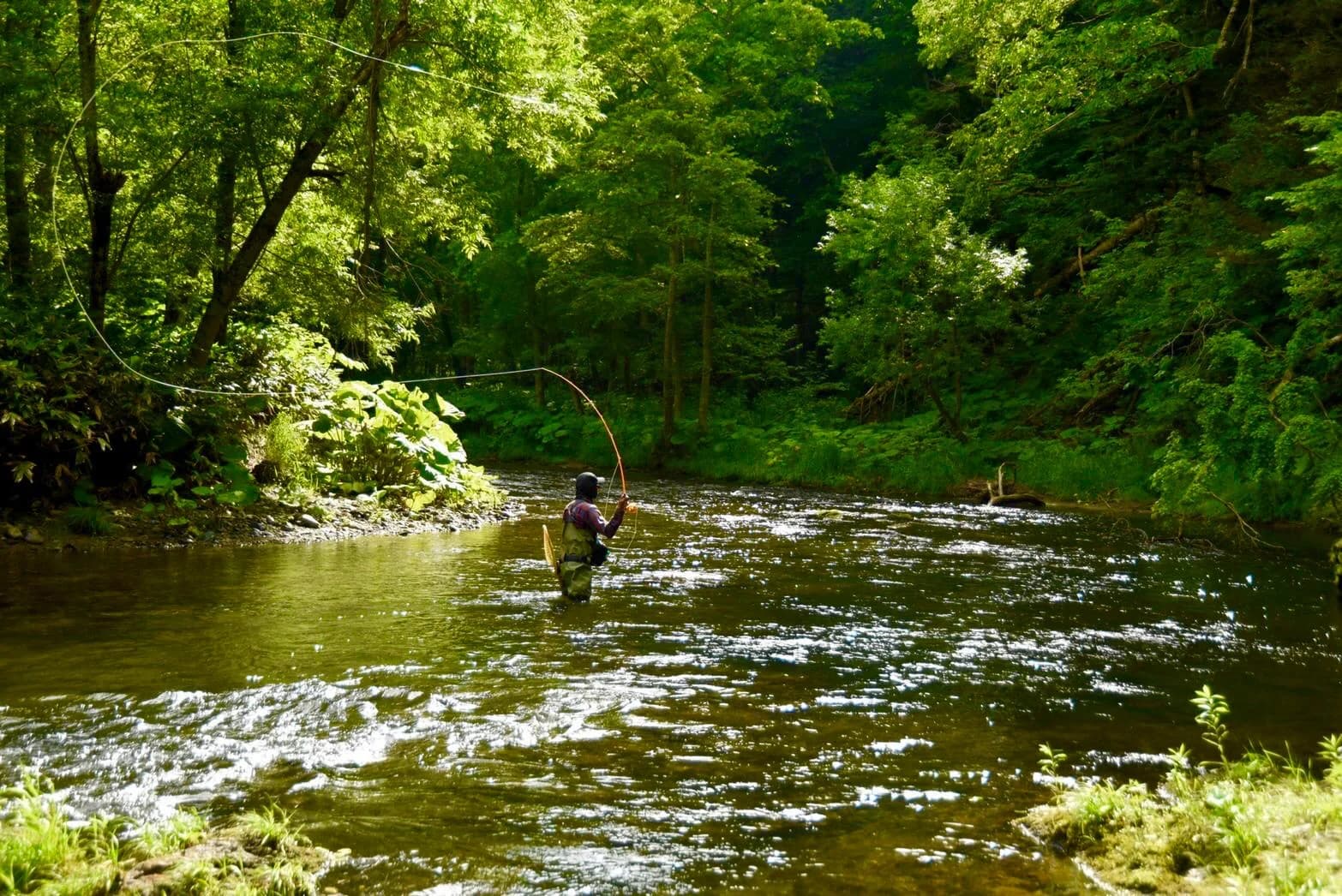
Sorachi tributaries around Furano (e.g. the Nishitatsupu River) exemplify the fishing. These streams typically feature long deep runs and boulder-strewn pocket water. Felt-soled wading boots and a wading staff are recommended due to very slick rocks and strong currents.
The Sorachi is generally accessible via road crossings near Furano and Minami-Furano, and upper sections near Kanayama Lake and the Sorapuchi headwaters (near Tomamu) flow through forested areas with limited development. Fishing pressure is moderate. Local anglers and guides do visit on weekends, but it's usually easy to find solitude on a weekday or by walking away from access points. The scenery is fantastic, with the river winding through farm valleys and foothills backed by the Daisetsuzan Range.
Mu River (Mukawa)
Originating on the slopes of Mt. Karifuri near Tomamu, the Mu River (also called Mukawa) flows south through the Hidaka Mountains toward the Pacific. This 135 km long river is one of Hokkaido's "Class A" waterways and remains relatively pristine, with about 80% of its basin forest-covered.
The Mu is better known for its autumn shishamo smelt runs downstream, but its upper and midstream reaches harbor wild trout and char in fast, oxygen-rich waters. Expect yamame (masu trout) and white-spotted char as the primary natives, along with introduced rainbow trout. Notably, no brown trout were found in this system, indicating the salmonids here are mostly indigenous or naturalized species.
For fly fishers, the Mu's character is steep and rugged, one reason it's famous for white-water rafting. Between pools and pockets, it cascades through bouldery rapids and occasionally narrow gorges. Access can be challenging. Roads skirt the river in places (e.g. near the town of Shimukappu/Tomamu and farther downstream in Mukawa town), but many stretches require hiking in.
The payoff for exploring this river is very low fishing pressure. These pools see few rods, and the fish (though often smaller 6–12 inch class) are truly wild. Be prepared for swiftly changing water levels and exercise caution in the Mu's strong currents. If you venture here, bring your bear bell and spray (the Mu flows through prime brown bear territory) and consider a fishing partner due to the remoteness.
Tokachi River & Tributaries
The Tokachi River system to the east is considered the mecca of trout fishing in Japan. Within reach of Tomamu (an hour drive to upper Tokachi) or a bit farther from Furano, the Tokachi and its many tributaries offer tremendous variety. The river drains a huge area from the Daisetsuzan National Park down to the Pacific, and hosts an array of salmonid species rarely all found together elsewhere.
In the Tokachi basin you'll find native white-spotted char and Dolly Varden, yamame and even anadromous cherry salmon (sakuramasu) in season, chum and pink salmon runs in lower reaches, the elusive Sakhalin taimen (Hucho perryi) in select remote tributaries, plus self-sustaining populations of introduced rainbow and brown trout. Most of these fish are beautiful and truly wild, reproducing naturally, so catch-and-release is strongly encouraged by local authorities to keep it that way.
Within 1–1.5 hours of Furano/Tomamu, focus on the upper and mid Tokachi region. For example, the upper Tokachi near Sahoro/Karakachi (around Sahoro Resort) and the tributary Kuttari (Kutarika) River offer clear freestone streams with abundant char and yamame. Farther downstream by Shintoku or Otofuke, the Tokachi gains size. Here you might swing flies in bigger water for rainbows or encounter salmon in fall. Smaller tributaries like the Biribetsu or Shisorapuchi streams can fish well for rainbows and char if flows are good.
Overall, access in the Tokachi basin is relatively easy. There are many bridge crossings, river park areas, and farm roads. Guided trips and angling maps exist given the river's fame. That said, the system is so large that you can still find plenty of unpressured water by exploring lesser-known creeks or stretches away from towns.
The Tokachi's size and diversity mean you should tailor tactics to the location: small mountain creek techniques in headwaters (short rods and stealth for skittish yamame), versus bigger rods and perhaps streamers or spey casts on the mainstem for larger trout and salmon. Wading is generally moderate in upper reaches (gravel and rock beds), but use caution in the main river which can run high or silty after rains (the Tokachi carries glacial melt and can be turbid at times). Always check conditions, but when it's clear, this region offers world-class fly fishing amid spectacular landscapes.
Chūbetsu River
Flowing out of Daisetsuzan National Park to the northwest of Furano, the Chūbetsu River is another excellent wild trout stream reachable in about an hour. It begins high on Asahidake and passes through Lake Chūbetsu (a reservoir) before descending toward Asahikawa.
The upper Chūbetsu below the dam is especially attractive for anglers: despite the dam, the outflow is gin-clear, cold, and nutrient-rich, creating a beautiful stream full of life. The river tumbles over bedrock and gravel at a lively gradient, forming a long succession of rapids and pools. White-spotted char (iwana) thrive here in the colder waters, and you'll also find yamame trout in the middle-lower sections. Some rainbow trout may be present closer to town.
The Chūbetsu's reputation is more for quantity of smaller native fish rather than trophy-sized specimens, an ideal place for a 3–4 weight rod and a dry fly or light nymph rig on a summer day.
Access to the Chūbetsu is very straightforward. A road parallels much of the river near Higashikawa, and there are parks and pull-offs near the river. In fact, a public bus from Asahikawa can drop you within walking distance of good spots, a rarity in such a wild setting. Fishing pressure is moderate to low. Locals do fish here, but the river's fast flow attracts kayakers more often than anglers. You can usually have a stretch to yourself, especially on weekdays. Wading is manageable in low-medium flows (watch for sudden releases from the dam, always observe the posted notices about discharge levels). Because it is a "Class A" river, the Chūbetsu is officially open to the public, and like most Hokkaido rivers, no license is required to fish it. It's a great choice if you are based in Furano and want a half-day trip to a scenic trout stream near the national park.
Other Notable Streams
Aside from the major rivers above, the Furano–Tomamu region is peppered with smaller tributaries and mountain creeks that can provide fantastic wild fishing. For example, streams flowing into Lake Kanayama (Minamifurano) hold wild char and trout. The upper Sahoro River (in the Sorachi headwaters area) and its feeder brooks have native char in a remote setting not far from Tomamu.
In eastern Hokkaido beyond the Tokachi basin, rivers like the Ashoro, Kushiro, and Shiribetsu are a bit farther afield but also renowned. If you are willing to drive a little more and perhaps hike in, countless unpressured "blue lines" await. Just remember that these truly wild creeks often require bushwhacking, bear awareness, and a commitment to catch-and-release to keep them healthy.