Conditions & Timing for Central Hokkaido Backcountry Skiing
← Dispatches from Central Hokkaido
Central Hokkaido receives massive snowfall and offers world-class powder conditions. Here's what to expect in terms of snow, weather, and timing for backcountry skiing.
Snowfall & Snow Quality
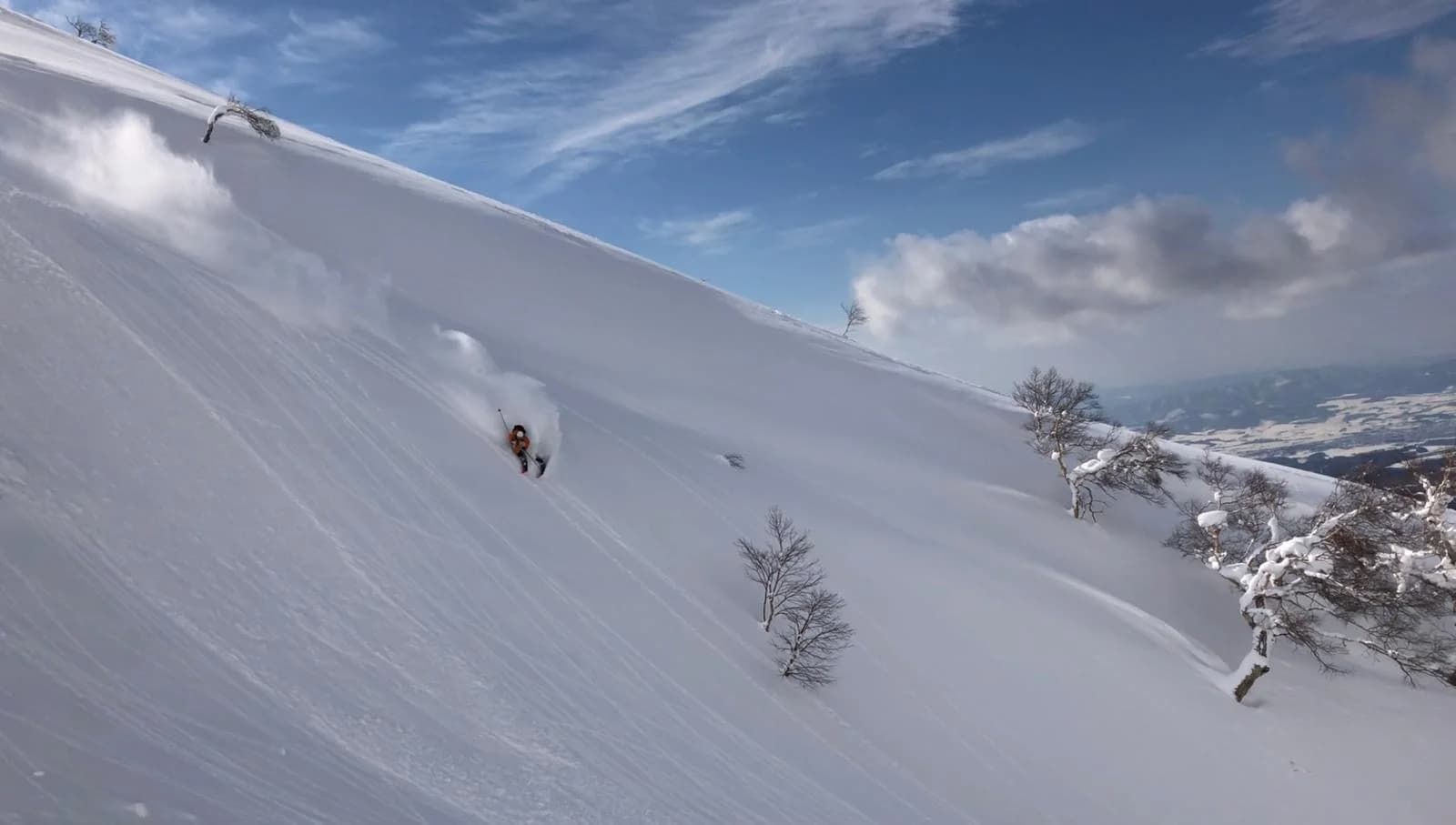
Central Hokkaido receives massive snowfall, often 12–15 meters annually in the high basins. The dry continental climate produces ultra-light, dry powder that's among the best in the world. This isn't coastal snow that gets heavy with moisture; it's the kind of blower powder that skiers travel across the globe to experience.
Mid-winter base depths in the high basins can reach 4 meters or more. The snow quality stays excellent because the cold interior air keeps it dry and light. North-facing slopes and tree-sheltered areas preserve powder for days, even weeks, after a storm.
Mid-Winter (January–February)
January and February bring the deepest snow and most consistent powder. Expect frequent storms dumping 20–50 cm at a time. The trade-off is weather: high winds, low visibility, and brutal cold are common. Alpine objectives are often off-limits due to whiteout conditions or extreme wind.
This is when tree skiing shines. Protected zones like Furano-dake or lower Tokachidake offer excellent powder even when the peaks are stormed out. You'll spend a lot of time in the trees during storms, waiting for weather windows to hit the alpine. The powder is worth it – consistently deep, cold, and dry.
March
March offers a sweet spot: deep snowpack with more stable weather and occasional bluebird days. The snowpack is at its maximum depth, and you get more clear skies to appreciate the stunning scenery. This is when summit attempts become more viable, and longer tours are possible with more daylight.
Weather moderates but can still be cold. You'll get a mix of powder days and stable touring conditions. North-facing slopes and high elevations often still hold mid-winter powder, while south aspects may begin to develop sun-crust on sunny days.
Late Season (April)
April transitions to spring touring with corn snow and longer days. The snowpack begins to consolidate, and stability generally improves. This is when big peak attempts and traverses become more feasible, though you're dealing with spring snow stability and potentially transitioning snow.
Some aspects develop sun-crust, but shaded north faces can still offer excellent skiing. The weather is generally more stable, and you have more daylight to work with. This period is more for experienced spring tourers than standard powder trips.
Avalanche Considerations
Avalanche conditions require constant assessment. Wind-loading can create slabs on leeward slopes, and the area's big terrain features (bowls, convexities, etc.) can slide during or just after storms. Persistent weak layers can develop in the cold, especially on north-facing slopes.
There's no ski patrol in the backcountry. The Japan Avalanche Network issues a thrice-weekly forecast for Central Hokkaido, but it's general information. Skiers must be able to assess conditions on the fly. Carrying beacon, shovel, and probe, and knowing how to use them, is mandatory.
Conditions change daily, and what was safe yesterday might not be safe today. A guide assesses snow stability, wind patterns, and terrain hazards in real time, making decisions based on current conditions rather than general forecasts. This local knowledge is crucial for safe backcountry travel.
Weather Patterns
Mountain weather can turn on a dime. A sunny morning can become a blizzard by afternoon. High winds are common, especially in the alpine, and can create dangerous wind-loading and whiteout conditions. The ropeway at Asahidake closes during strong winds, and many alpine objectives become unsafe.
This is why having multiple zone options matters. When one area is stormed out, another might be protected. Tree zones offer refuge during bad weather, while alpine objectives require clear, stable conditions. A guide knows which zones work in which conditions and can adapt the plan accordingly.