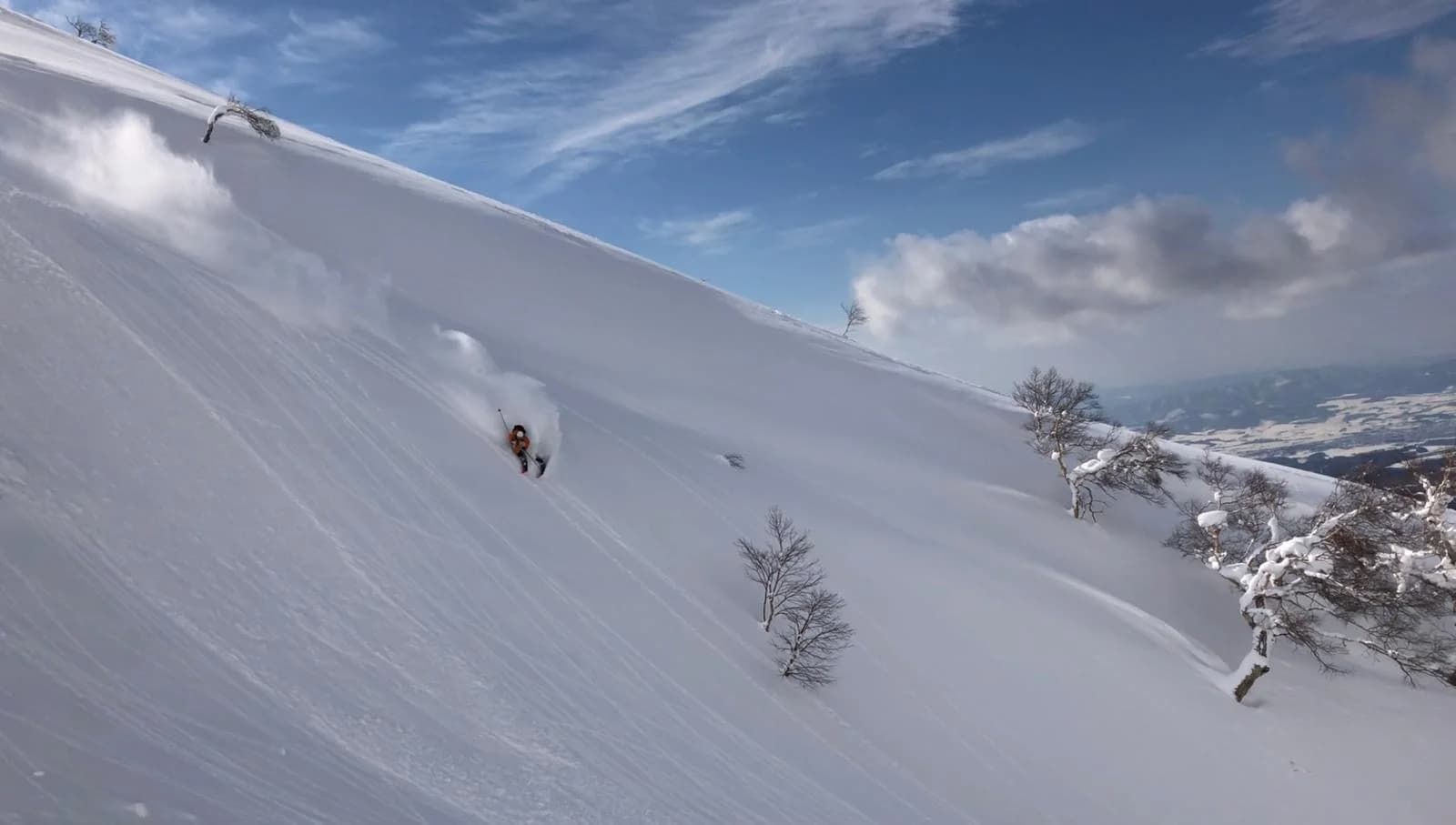
Major Backcountry Skiing Zones in Central Hokkaido
← Dispatches from Central Hokkaido
Central Hokkaido is a playground of deep powder, volcanic peaks, and pristine backcountry far from the crowds. Within about 1.5 hours of Furano and Tomamu lie Hokkaido's highest mountains and legendary powder stashes. Here's an overview of the major zones we guide.
Asahidake
Hokkaido's highest peak (2,291 m) in Daisetsuzan National Park. A ropeway provides access to alpine terrain, but beyond the top station it's all unpatrolled backcountry. Features alpine bowls, steep faces around volcanic fumaroles, and gladed lower slopes. The powder here is legendary: waist-deep and ultra-light, among the best in the world.
Weather can be fierce in mid-winter with high winds, low visibility, and wind-scoured snow in the alpine. The ropeway closes during strong winds, and bluebird days are rare in January–February. On clear days, you can venture higher toward the summit crater, but caution is needed: weather changes fast and avalanche risk is ever-present on the big open faces.
Best for advanced backcountry skiers comfortable with variable conditions and avalanche terrain. A guide is highly recommended to navigate the expansive bowls and find the best lines safely.
Tokachidake
Tokachidake is currently at Volcanic Alert Level 2, with access prohibited within approximately 1.5 kilometres of the 62-2 crater. Read our July 2026 Tokachidake eruption and winter planning update →
A legendary backcountry area in the southern Daisetsuzan range with no lifts. You earn every turn. Mount Tokachi (2,077 m) is an active volcano surrounded by sub-peaks offering everything from mellow bowls to steep chutes. The area faces mostly north, keeping powder in excellent condition longer.
Expect bottomless, dry powder and diverse terrain from birch forests to alpine chutes. Access is via Tokachidake Onsen, about an hour from Furano. Requires multiple hours of skinning per run (600–800 m vertical). Mid-winter brings heavy snowfall and frequent low visibility, but the powder is consistently great.
When access and conditions allow, it is ideal for advanced to expert backcountry skiers who are fit and experienced in deep powder and alpine conditions. Given the complex terrain and lack of on-site information, a guide is strongly advised.
Furano-dake
The southernmost high peak (1,912 m) of the Daisetsuzan range, offering excellent tree skiing and more protected terrain. The "Giant Ridge" route provides relatively safe, moderate-angle skiing with well-spaced trees. A good option for stormy days when higher peaks are socked in.
Access is straightforward from Hakuginso/Fukiage Onsen. Suitable for intermediate to advanced backcountry skiers. More forgiving than the bigger peaks while still delivering Central Hokkaido's signature powder quality. The tree cover keeps snow light and consistent even in bad weather.
Tomamu Area
Ridgelines and peaks just outside Tomamu Resort offer untouched bowls and old-growth forests. Karifuri-dake (1,323 m) is a standout objective with deep powder on protected eastern slopes. The area sees slightly less snowfall than Daisetsuzan but still gets hammered with dry, powdery snow.
Can accommodate a range of abilities with proper guidance. The resort also offers cat-skiing and heli-skiing options for those who want lift-assisted access to backcountry powder. A good complement to days spent on-piste.
Sahoro
An underrated area with excellent tree skiing and a tournable summit. The resort keeps half its runs ungroomed, and the ridge above offers backcountry touring opportunities. Often has better weather when nearby areas are stormed in, making it a reliable fallback option.
Suitable for intermediate to advanced skiers. The ridge tour is straightforward and not overly steep, making it a good introduction to backcountry touring in Central Hokkaido. Powder lines can last days after a storm simply because there aren't many takers.
Eastern Daisetsuzan & Local Gems
For ultimate remoteness, the eastern side of Daisetsuzan National Park offers big alpine bowls and long tree runs with virtually no infrastructure. Areas around Kamishihoro and Nukabira Onsen see even fewer skiers. There are also lesser-known local spots like Furanonishi-dake that offer solitude and excellent tree skiing.
These zones require expert-level skills, self-sufficiency, and navigation ability. Best experienced with a guide who knows the area, as access can be complex and hazards are numerous. You'll likely have entire mountains to yourself, but you're truly on your own.